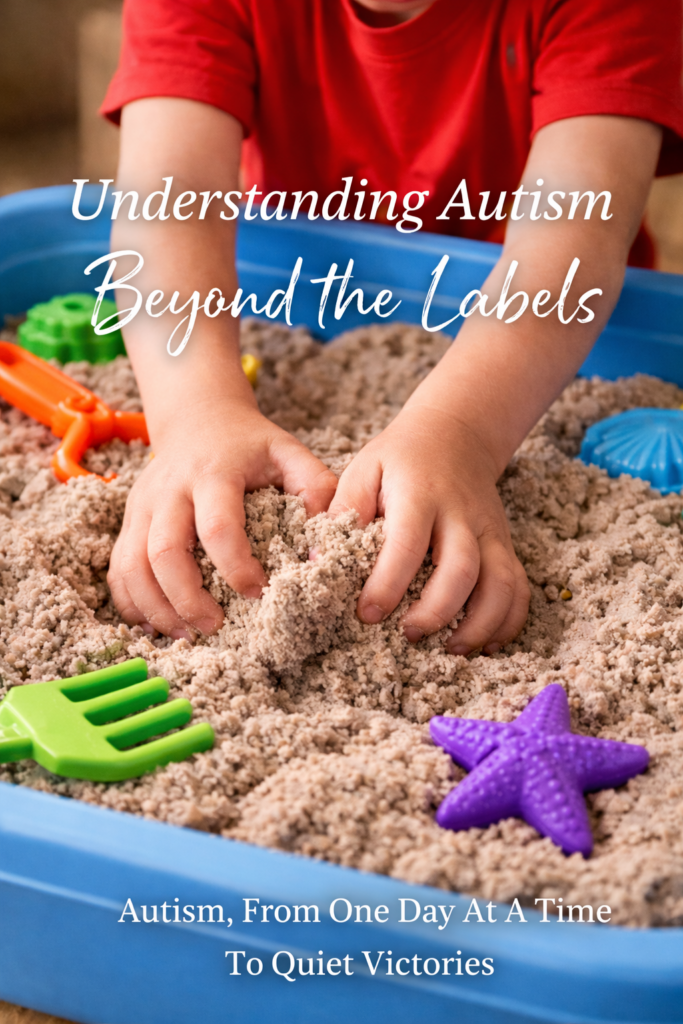
Autism, From One Day At A Time To Quiet Victories
I remember the exact moment the label entered our lives.
It happened in a quiet office. A kind professional. Careful words. A sheet of paper slid across a desk.
In that moment, everything changed.
There was finally a name for what we’d been noticing. A word that explained so much. And somehow, not nearly enough.
The diagnosis was meant to help people understand my child.
What I’ve learned over the years is this: the label tells part of the story. A small part. But never the whole story.
If you’ve ever felt like people see the word “autism” before they see your child, like the diagnosis walks into the room before they do, this is for you.
What the Label Gave Us
Let me be clear. I’m not against labels.
That piece of paper opened doors. Therapy. Support. Accommodations at school. It gave me language when I didn’t have any. It helped me explain meltdowns, stimming, sensory struggles. It helped me understand that what I was seeing wasn’t bad parenting and it wasn’t something to “fix.”
For a while, that label felt like a lifeline.
But over time, something started to bother me.
The more I read the checklists and characteristics, the more I worried I was seeing my child through a clinical lens instead of as a whole person.
The Problem With Checkboxes
Labels are tidy. They fit neatly into forms and files.
My child does not.
My child is the way they laugh. A deep, uncontrollable giggle that starts in their belly and takes over their whole body.
They’re the way they notice details I miss completely. A tiny crack in the sidewalk. The exact shade of pink in the evening sky. The feeling of a shirt tag that I wouldn’t even notice.
None of that shows up in the diagnostic criteria.
And yet, that’s who they are.
The Hardest Part Isn’t Always the Autism
Some days are hard. We all know that.
But sometimes the hardest part isn’t the sensory overload or the meltdowns.
It’s other people.
The looks in the grocery store when my child is overwhelmed and I can’t calm things down fast enough.
The well-meaning relative who suggests more discipline.
The stranger who thinks five seconds of observation qualifies them to offer advice.
And the assumptions. So many assumptions.
If your child is verbal, they must be “high functioning.”
If they melt down in public, you must be a bad parent.
If they don’t match the stereotype, maybe you’re exaggerating.
There’s a quiet exhaustion that comes from constantly explaining. Constantly defending. Constantly translating your child to a world that doesn’t always try to understand them.
What the Label Misses
The label tells you my child processes the world differently.
It doesn’t tell you how deeply they feel things. Sometimes so deeply it overwhelms them.
The label tells you they may struggle socially.
It doesn’t tell you how hard they’re trying. It doesn’t tell you about the small attempts to connect that go unnoticed because they don’t look typical.
The label tells you about sensory sensitivities.
It doesn’t tell you what it feels like to experience sound as physical pain. Or a fabric as unbearable. Or joy so big it spills out in flapping or spinning or jumping.
The label gives information.
It doesn’t give you my child.
Behavior Is Communication
This took me time to learn.
When my child melted down, I used to focus on stopping it. Making it end. Fixing it.
Then one day, on one of those long, draining days, I asked a different question.
Not “How do I make this stop?”
But “What are they trying to tell me?”
That meltdown wasn’t defiance. It was fluorescent lights and too much noise.
That withdrawal wasn’t rudeness. It was exhaustion from masking all day.
That repetitive movement wasn’t something to correct. It was self-regulation.
Behavior is communication.
Once I truly understood that, I stopped seeing “autism behaviors” and started seeing my child reaching out in the only way they could at that moment.
The Beautiful Parts No One Talks About
There are parts of this journey that are beautiful.
The way my child sees patterns and details that most people miss.
The honesty. The kind that isn’t polished or filtered.
The joy. Pure and uncontained.
My child has taught me to slow down. To question what “normal” even means. To notice things I would have rushed past before.
They’ve shown me that connection doesn’t have to look one specific way to be real.
None of that shows up in a diagnostic manual.
But it’s real. And it matters.
The Complicated Feelings
I won’t pretend it’s all easy.
There are days I’m tired in a way sleep doesn’t fix. Days I worry about the future. Days I wish things were simpler.
For a long time, that wish came with guilt.
Now I understand something important.
I can love my child exactly as they are and still wish the world made things easier for them.
Both can be true.
Loving someone doesn’t mean pretending the hard parts don’t exist. It means holding the hard and the beautiful at the same time.
What I Wish the World Understood
If I could change one thing, it wouldn’t just be more services or more programs.
It would be this.
I wish people would meet my child halfway.
Instead of expecting them to act “normal,” I wish people would ask, “What do you need?”
I wish curiosity replaced judgment.
I wish the starting assumption wasn’t that my child is broken, but that my child is different. And that different is okay.
Autism isn’t a wall. It’s a different way of experiencing the world.
And honestly, if more people made space for that difference, the world would be kinder for everyone.
The Whole Story
After all these years, here’s where I’ve landed.
The label is useful. It opens doors. It gives language. It connects us to a community that understands.
But it is not the whole story.
The whole story is my child waking up every day and navigating a world that wasn’t built with them in mind.
The whole story is their courage.
Their laugh.
Their focus.
Their deep feelings.
Their unique way of loving.
The whole story is them.
Not the diagnosis.
Not the checklist.
Not the assumptions.
Just them.
A Gentle Question
Before you leave this post, I want to offer you something simple.
If you could tell the world one thing about your child, beyond the diagnosis and beyond the label, what would it be?
Sit with that.
Say it out loud if you want to.
Because it matters.
They matter.
Not the label.
Them. 💙

Join our community of real parents finding hope and support through everyday challenges.
✓ Receive gentle encouragement on tough days.
✓ Discover practical ideas that fit your family’s needs.
Finding Strength in Everyday Challenges
Parenting can be a journey filled with ups and downs, especially when navigating the complexities of autism. Every day brings new challenges, and it’s essential to remember that you are not alone. Many parents share similar experiences, and together we can find ways to cope and thrive. Embrace the small victories and allow yourself to feel the emotions that come with this journey. It’s okay to seek help and lean on others for support. Remember, you are doing your best, and that is enough.
Embracing the Journey Together
In the midst of the chaos, it’s vital to take a moment to breathe and reflect. Each day is a new opportunity to learn and grow, both for you and your child. Surround yourself with a community that understands your struggles and celebrates your triumphs. Share your stories and listen to others; this connection can provide immense comfort and reassurance. Know that it’s perfectly normal to have hard days, and reaching out for support is a sign of strength.
Finding Joy in the Little Things
Support and Understanding
When the days feel overwhelming, remember that it’s okay to take a step back. Focus on what you can control and let go of the rest. Celebrate the little moments that bring joy, whether it’s a smile from your child or a quiet moment of peace. Practice self-care and prioritize your mental health; you cannot pour from an empty cup. Seek out resources and communities that resonate with your experiences.
- Gentle Support: This blog aims to provide a safe space for parents to share their experiences and find comfort in knowing they are not alone. We offer practical advice and emotional support tailored to the unique challenges of autism parenting.
- Reassurance for Hard Days: On tough days, it’s crucial to remind yourself that it’s okay to feel overwhelmed. Take a moment to breathe and reach out to someone who understands your journey. You are stronger than you think, and tomorrow is a new day.
- Practical Ideas for Real Families: Our content is designed to fit seamlessly into your life, offering actionable tips and relatable stories. We focus on what works for real families, ensuring that you can implement these ideas without added pressure.